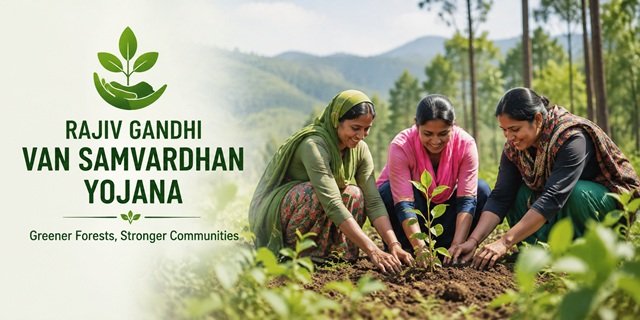
Rajiv Gandhi Van Samvardhan Yojana is a flagship afforestation initiative of the Himachal Pradesh Forest Department that encourages registered Community-Based Organisations (CBOs) to restore degraded forest land while creating sustainable livelihood opportunities in rural areas. Under the scheme, eligible groups such as Mahila Mandals, Yuvak Mandals, Self-Help Groups, Joint Forest Management Committees, and Village Forest Development Societies receive financial assistance of up to ₹1.20 lakh per hectare for plantation work, along with annual performance-based incentives linked to the survival of planted saplings for five years. The scheme is implemented under the guidance of the Forest Department through its official RGVSY portal.
Himachal Pradesh Rajiv Gandhi Van Samvardhan Yojana Highlights | |
|---|---|
| Scheme Name | Rajiv Gandhi Van Samvardhan Yojana (RGVSY) |
| Implementing Department | Himachal Pradesh Forest Department |
| Official Notification | File No. FFE-B-F(5)-1/2018-I, dated 13 August 2025 |
| Launched By | Chief Minister Thakur Sukhvinder Singh Sukhu |
| Pilot Launch | 2 June 2025, Hamirpur |
| Statewide Rollout | 14 August 2025 during State-Level Van Mahotsav |
| Eligible Beneficiaries | Registered Community-Based Organisations (Mahila Mandals, Yuvak Mandals, SHGs, JFMCs, VFDSs, etc.) |
| Plantation Area | Generally 1 to 5 hectares of degraded or barren forest land |
| Plantation Grant | Up to ₹1.20 lakh per hectare |
| Performance Incentive | ₹60,000 to ₹1,00,000 per 2 hectares annually for up to 5 years |
| Funding Source | Compensatory Afforestation Fund (CAMPA) |
| Project Duration | 2025-2030 |
| Official Scheme Page | hpforest.gov.in/menu/RGVSY |
Introduction of Himachal Pradesh Rajiv Gandhi Van Samvardhan Yojana: A Brief Insight
The Rajiv Gandhi Van Samvardhan Yojana is a community-based afforestation scheme launched by the Himachal Pradesh Forest Department to restore degraded forest land while creating livelihood opportunities for local communities. The scheme was officially notified on 13 August 2025 after Chief Minister Thakur Sukhvinder Singh Sukhu launched it on a pilot basis from Hamirpur on 2 June 2025. It was subsequently expanded across all Assembly constituencies during the State-Level Van Mahotsav held on 14 August 2025.
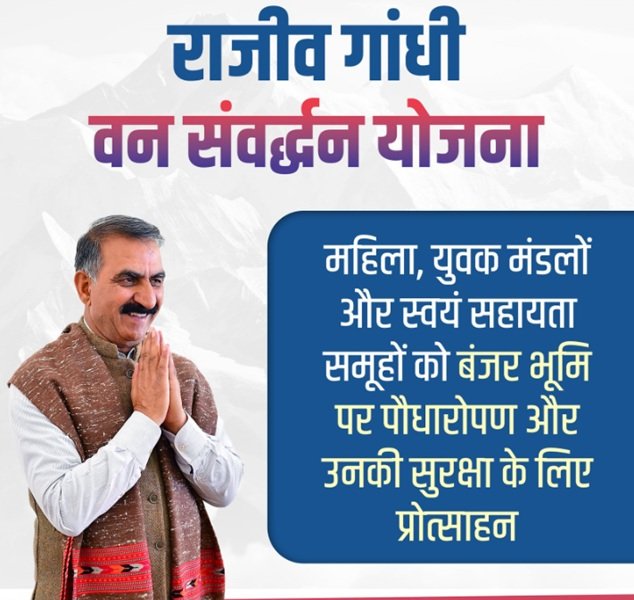
Unlike traditional plantation programmes that are implemented entirely by the Forest Department, the Rajiv Gandhi Van Samvardhan Yojana places local communities at the centre of forest restoration. Under this model, registered Community-Based Organisations (CBOs), including Mahila Mandals, Yuvak Mandals, Self-Help Groups, Joint Forest Management Committees, and Village Forest Development Societies, receive financial assistance to plant, protect, and maintain plantations on degraded forest land for a period of five years. This approach not only improves forest cover but also creates sustainable income opportunities for people living in rural areas.
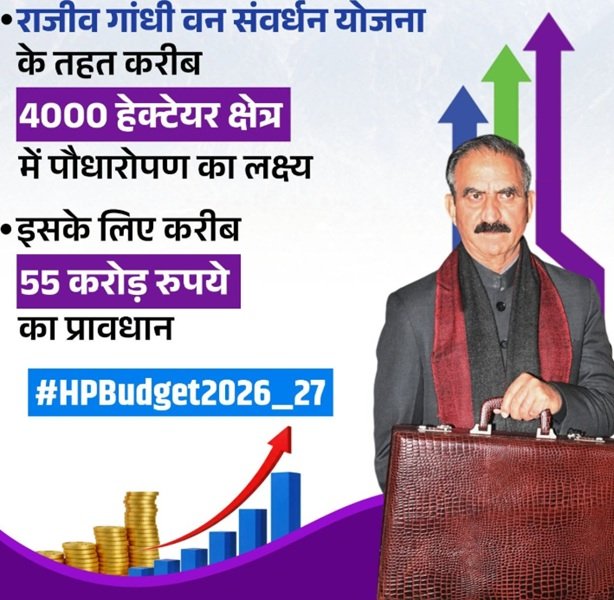
The scheme is being implemented with an outlay of ₹100 crore over five years, from 2025 to 2030, using funds available under the Compensatory Afforestation Fund Management and Planning Authority (CAMPA). During the initial phase, the Forest Department targeted plantation activities across nearly 1,000 to 1,500 hectares of degraded forest land. A significant proportion of the plantation consists of fruit-bearing and indigenous tree species so that participating communities receive long-term ecological as well as livelihood benefits.
Participating Community-Based Organizations receive a plantation grant of up to ₹1.20 lakh per hectare for carrying out plantation work. In addition, the Forest Department provides annual performance-based incentives for up to five years, depending on the verified survival rate of the planted saplings. Since the incentive is linked directly to plantation survival, participating organisations remain actively involved in protecting and maintaining the plantation even after the initial planting work is completed.
To participate in the scheme, a Community-Based Organisation must be registered, maintain a bank account in its own name, and fulfil the eligibility conditions prescribed by the Forest Department. After identifying a suitable plantation site, the concerned Divisional Forest Officer (DFO) prepares the plantation micro plan jointly with the organisation. Financial assistance is released in stages after the plantation work and subsequent inspections are completed.
Through the Rajiv Gandhi Van Samvardhan Yojana, the Himachal Pradesh Government has adopted a long-term community participation model that combines environmental conservation with rural development. By involving local organisations directly in plantation and protection activities, the scheme aims to strengthen forest resources while ensuring that the benefits of conservation reach the communities living closest to them.
If you are looking for more welfare and environmental initiatives introduced by the Government, you can also explore our Himachal Pradesh Government Welfare Schemes page, where we regularly publish the latest schemes, financial assistance programmes, subsidy initiatives, and beneficiary-focused updates.
Benefits Provided to Eligible Beneficiaries
Under the Rajiv Gandhi Van Samvardhan Yojana, the Himachal Pradesh Forest Department provides financial assistance, plantation material, and performance-based incentives to participating Community-Based Organisations (CBOs). The scheme encourages long-term protection of plantations by linking incentive payments to the survival rate of the planted saplings.
- Community-Based Organizations receive a plantation grant of up to ₹1.20 lakh per hectare. The Forest Department releases the amount in two instalments—50% after approving the plantation micro plan and the remaining 50% after successful completion and verification of the plantation work.
- The Forest Department supplies quality planting material, including native and fruit-bearing species, through its nurseries at no additional cost to the participating Community-Based Organisation.
- Eligible Community-Based Organizations receive annual performance-based incentives for five years, depending on the verified survival percentage of the plantation.
| Year | Above 50% Survival | 45%–50% Survival | 35%–45% Survival |
|---|---|---|---|
| Year 1 | ₹1,00,000 | ₹80,000 | ₹60,000 |
| Year 2 | ₹1,00,000 | ₹80,000 | ₹60,000 |
| Year 3 | ₹1,00,000 | ₹80,000 | ₹60,000 |
| Year 4 | ₹1,00,000 | ₹90,000 | ₹80,000 |
| Year 5 | ₹1,00,000 | ₹90,000 | ₹80,000 |
The Forest Department releases the annual incentive only after verifying the plantation’s survival rate. If the survival rate falls below 35% in any assessment year, no incentive is payable for that year. Normally, the first incentive is released after one year of plantation, followed by annual payments after each verification.
- A maintenance corpus equal to 10% of the plantation cost is reserved for the sixth and seventh years to support continued protection and upkeep of the plantation.
- Participating Community-Based Organisations may collect grass, fodder, fallen twigs, and other permitted Non-Timber Forest Produce (NTFP) from the plantation area in accordance with the applicable forest rights and departmental guidelines.
- The scheme does not transfer ownership of the forest land or standing trees to the Community-Based Organisation. The allotted land remains under the ownership and control of the Himachal Pradesh Forest Department.
Eligibility Conditions Required to be Fulfilled
The Rajiv Gandhi Van Samvardhan Yojana does not accept applications from individual beneficiaries. Instead, eligible Community-Based Organizations (CBOs) participate in the scheme in partnership with the Himachal Pradesh Forest Department. Before a plantation site is allotted, the participating organisation must satisfy the following eligibility conditions:
- Must be a registered Community-Based Organisation, such as a Joint Forest Management Committee (JFMC), Village Forest Development Society (VFDS), Mahila Mandal, Yuvak Mandal, Self-Help Group (SHG), or any other eligible community organisation involved in rural development or forest conservation.
- Must have a functional bank account in the name of the Community-Based Organisation, as all incentive payments are released electronically to this account.
- Must have a properly constituted management structure, including a President, Secretary, Treasurer, and a 3 to 5-member Executive Committee responsible for implementing plantation activities and maintaining financial records.
- Groups with previous experience in afforestation, forest conservation, or Non-Timber Forest Produce (NTFP) activities may receive preference. However, new Community-Based Organisations can also participate if they fulfil the prescribed conditions.
- Must agree to protect and maintain the allotted plantation site for a period of five years and ensure the minimum survival rate prescribed by the Forest Department to remain eligible for performance-based incentives.
- Plantation sites are generally allotted on 1 to 5 hectares of degraded or barren forest land. Wherever possible, the Forest Department attempts to allot around 2 hectares to each participating Community-Based Organisation, subject to land availability.
- Each forest range is expected to involve multiple eligible Community-Based Organizations to encourage wider community participation in afforestation and forest restoration activities.
Documents Required to be Attached
Under the Rajiv Gandhi Van Samvardhan Yojana, applications are submitted by eligible Community-Based Organisations (CBOs) instead of individual applicants. Before a plantation site is allotted, the concerned community group must furnish the required documents to establish its legal status, organisational structure, and financial accountability.
- Registration Certificate: Valid registration proof of the Community-Based Organization, such as a Joint Forest Management Committee (JFMC), Village Forest Development Society (VFDS), Mahila Mandal, Yuvak Mandal, Self-Help Group (SHG), or any other eligible registered community organisation.
- Bank Account Details: A functional bank account in the name of the Community-Based Organisation. If the group does not already have one, it must open a bank account before executing the agreement with the Forest Department.
- List of Office Bearers: Details of the President, Secretary, Treasurer, and other authorised office bearers of the Community-Based Organization.
- Executive Committee Resolution: A resolution constituting a 3 to 5-member Executive Committee responsible for supervising plantation activities, maintaining records, and managing project funds. The committee details must be shared with the concerned Range Forest Officer.
- Previous Experience (if available): Documents showing the group’s earlier involvement in afforestation, forest protection, Non-Timber Forest Produce (NTFP) activities, or other community-based conservation programmes. Preference may be given to experienced organisations.
- Plantation Micro Plan: A site-specific plantation plan prepared jointly with the Forest Department, covering plantation species, protection measures, soil and moisture conservation activities, and implementation strategy.
- Utilisation Certificates and Progress Reports: Periodic utilisation certificates, plantation progress reports, and survival records submitted to the Forest Department for verification before the release of subsequent incentive payments.
How Beneficiaries Can Apply to Avail the Benefit of this Scheme
The Rajiv Gandhi Van Samvardhan Yojana does not have an online application portal for individual beneficiaries. Instead, eligible Community-Based Organizations (CBOs) participate in the scheme in coordination with the Himachal Pradesh Forest Department. The application and implementation process generally follows these steps:
Step 1: Ensure that your Community-Based Organisation is eligible to participate. The group should be a registered Mahila Mandal, Yuvak Mandal, Self-Help Group (SHG), Joint Forest Management Committee (JFMC), Village Forest Development Society (VFDS), or another eligible community organisation. It should also have a functional bank account in its own name.
Step 2: Constitute the management committee of the organisation by identifying the President, Secretary, Treasurer, and a 3 to 5-member Executive Committee. Pass the necessary resolution and share the committee details with the concerned Range Forest Officer.
Step 3: Contact the Divisional Forest Officer (DFO) or the local Forest Range Office and express your willingness to participate in the scheme. The Forest Department identifies suitable degraded or barren forest land available for plantation.
Step 4: Participate in the joint site inspection with Forest Department officials. The department generally gives preference to plantation sites located close to the Community-Based Organization so that regular protection and maintenance become easier.
Step 5: Prepare a plantation micro plan jointly with the Forest Department. The plan normally includes the plantation layout, species selection, fencing arrangements, soil and moisture conservation measures, and the maintenance strategy for the allotted site.
Step 6: After the competent authority approves the plantation micro plan and sanctions the project, sign the required agreement with the Forest Department. The department will also supply the approved planting material through its nurseries.
Step 7: Start plantation and protection work as per the approved plan. The Forest Department releases the first instalment of financial assistance after approval of the plantation plan and releases the remaining amount after verifying the completed plantation work.
Step 8: Protect and maintain the plantation regularly. Submit utilisation certificates, progress reports, and other records whenever required by the Forest Department during the implementation period.
Step 9: Every year, Forest Department officials inspect the plantation site to verify the survival rate of the saplings. The inspection includes physical verification, geo-tagged photographs, and monitoring through the department’s digital system.
Step 10: Based on the verified survival percentage, eligible Community-Based Organizations receive the applicable annual incentive. The department continues this performance-based incentive for up to five years, subject to the prescribed survival criteria.
Responsibilities of the Community-Based Organization and the Forest Department
The Rajiv Gandhi Van Samvardhan Yojana follows a partnership model in which both the participating Community-Based Organization (CBO) and the Himachal Pradesh Forest Department have clearly defined responsibilities to ensure the successful implementation and long-term protection of the plantation.
- Responsibilities of the Community-Based Organization: Carry out plantation work on the allotted forest land, protect the plantation from grazing, fire, encroachment, and other damage, maintain the site for the prescribed period, keep proper financial and activity records, and submit utilisation certificates and progress reports as required by the Forest Department.
- Responsibilities of the Forest Department: Identify suitable plantation sites, prepare the plantation micro plan jointly with the CBO, supply quality planting material, provide technical guidance, monitor plantation progress, verify the survival rate of saplings, and release financial assistance and performance-based incentives as per the approved guidelines.
Important Links Available
- Rajiv Gandhi Van Samvardhan Yojana Launch Press Release
- Rajiv Gandhi Van Samvardhan Yojana Details
- Himachal Pradesh Forest Department
- Government of Himachal Pradesh
Contact Details in Case of Help Needed
If your Community-Based Organization needs assistance regarding participation, plantation site selection, fund release, or implementation of the Rajiv Gandhi Van Samvardhan Yojana, you can contact the concerned Forest Department office through the following channels:
- Divisional Forest Officer (DFO) – Contact the concerned DFO office for plantation proposals, site allotment, approvals, and project implementation.
- Range Forest Officer (RFO) – Contact the local Range Forest Office for field-level guidance, plantation monitoring, verification, and other implementation-related assistance.
- Himachal Pradesh Forest Department – Visit the department’s official website for office contact details, notifications, circulars, and other scheme-related information.
The scheme is implemented through district and forest range offices across Himachal Pradesh. Therefore, participating Community-Based Organizations should contact their nearest Forest Department office for timely assistance.
Frequently Asked Questions (FAQs)
Q. What is the Rajiv Gandhi Van Samvardhan Yojana?
Ans. Rajiv Gandhi Van Samvardhan Yojana is an afforestation initiative of the Himachal Pradesh Forest Department that encourages registered Community-Based Organizations (CBOs) to develop and protect plantations on degraded forest land. The scheme provides financial assistance and performance-based incentives for maintaining plantations over a five-year period.
Q. Who is eligible to participate in the Rajiv Gandhi Van Samvardhan Yojana?
Ans. Registered Community-Based Organizations such as Joint Forest Management Committees (JFMCs), Village Forest Development Societies (VFDSs), Mahila Mandals, Yuvak Mandals, Self-Help Groups (SHGs), and other eligible community organisations can participate in the scheme.
Q. How much financial assistance is available under the scheme?
Ans. Eligible Community-Based Organizations can receive a plantation grant of up to ₹1.20 lakh per hectare. In addition, the Forest Department provides annual performance-based incentives for up to five years, depending on the verified survival rate of the plantation.
Q. How much forest land is allotted to a participating Community-Based Organization?
Ans. Plantation sites are generally allotted between 1 and 5 hectares of degraded or barren forest land. Wherever feasible, the Forest Department attempts to allot around 2 hectares to each participating Community-Based Organization, subject to land availability.
Q. What happens if the plantation survival rate is low?
Ans. The annual incentive depends on the verified survival percentage of the plantation. If the survival rate falls below the minimum level prescribed under the scheme, the Community-Based Organization will not receive the applicable performance incentive for that assessment year.
Q. Does the Community-Based Organization get ownership of the forest land?
Ans. No. The scheme does not transfer ownership of the forest land or standing trees. The land continues to remain under the control of the Himachal Pradesh Forest Department.
Q. Is Rajiv Gandhi Van Samvardhan Yojana the same as Rajiv Gandhi Green Adoption Yojana?
Ans. No. These are two separate schemes. Rajiv Gandhi Van Samvardhan Yojana focuses on community participation through registered Community-Based Organizations, whereas Rajiv Gandhi Green Adoption Yojana allows institutions and organisations to adopt degraded forest land under separate guidelines.
Q. How are payments released under the Rajiv Gandhi Van Samvardhan Yojana?
Ans. The Himachal Pradesh Forest Department releases eligible payments directly into the registered bank account of the participating Community-Based Organization after completing the required verification and inspection process.

Tabassum is a government schemes researcher and writer with 5 years of experience tracking Central and State welfare scheme programmes across India. She has covered 500+ schemes spanning agriculture, women welfare, education, and housing, helping lakhs of beneficiaries understand their entitlements in simple language.